


Ask a seasoned traveller what they know about Taiwan, and the answers follow a familiar, delicious script: the crowded corridors of Shilin Night Market, the aromatic bowl of beef noodle soup, or the improbable perfection of a pineapple cake. And they would not be wrong.
But Taiwan's culinary identity does not begin and end on a plate. Pour yourself a drink (metaphorically, for now), and consider this: the same island that gave the world bubble tea and stinky tofu also produces a whisky that bests Scotland on the global awards circuit, a beer so fresh it expires in eighteen days, and a sorghum spirit so ferociously strong it once served as the unofficial currency of a military island. Taiwan's drinking culture is layered, surprising, and like everything else about this place, it’s irresistibly worth exploring.
The Social Art of Drinking Taiwanese
To understand Taiwan's drinks, you must first understand why Taiwanese people drink. In many cultures, alcohol is an incidental companion to food, a way to unwind. Yet in Taiwan, it is relational. Drinking is a ritual of connection: it softens strangers into friends, seals business deals, and bridges the gap between the first awkward ten minutes of a gathering and the warm, loose camaraderie that follows.
The clearest window into this philosophy is the difference between saying cheers and saying 乾杯 (gān bēi). "Cheers" wishes you well. "Gān bēi", literally "let’s dry the cup" tells you to finish it. The implication is not subtle: when we drink together, we go all the way down together. And unlike the informal “bottoms up” in English, "gān bēi" is widely used even in formal, business occasions.
In traditional Taiwanese business culture, this communal spirit could tip into something rather more demanding. Arriving late to a dinner once meant absorbing three penalty shots(遲到罰三杯),downed in quick succession while your hosts watched with cheerful, merciless satisfaction. The ritual had a purpose: it was a fast-track icebreaker, a way to demolish social distance and bring the latecomer swiftly into the group's rhythm. There was also an unwritten rule that once a glass was clinked it must be emptied(敲杯就要乾杯). When every clink was a small commitment and the table just went clink after clink, drinking culture in Taiwan could also be seen as stressful in the old days.

Today's younger Taiwanese generation has, broadly speaking, graduated from this intensity. The phrase 小酌怡情, literally "a small drink just for the pleasure of it", captures the new mood: moderation, savour, appreciation. The pressure-cooker drinking games of corporate banquets have given way to craft beer bars in Taipei's Da'an District and whisky tastings in repurposed warehouses. Yet the underlying warmth, the instinct to share and to linger, remains unchanged. For any visitor navigating social or professional Taiwan, understanding the rhythm of the table — when to raise a glass, what to say, when to drink deeply — is its own kind of cultural fluency. If you’re looking to having dinner with your business partners in Taiwan, consider showing off the above knowledge you just learned about the drinking culture here. It’ll surely warm the bond up as fast as the liquor does to your cheeks.
Western Classics, Reborn Under a Subtropical Sun
Taiwan has a gift for taking the familiar and making it its own. Whisky, beer, and other Western staples, filtered through the island's subtropical climate and restless creativity, emerge with a character that is recognisably global yet unmistakably Taiwanese. For those new to the island's flavours, they are the most welcoming place to start.
Whisky: The Spirit of Status and Sophistication
To say that Taiwan consumes an extraordinary amount of Scotch whisky is not hyperbole, it is a matter of export statistics. According to data from the Scotch Whisky Association (SWA), Taiwan has ranked consistently among the top five global markets for Scotch whisky exports, placing approximately fourth in 2023-2024, behind only the United States, France, and Singapore. For an island of 23 million people, that figure is remarkable.
The reasons are cultural as much as gustatory. For decades, a bottle of Johnnie Walker Blue or a single malt from Islay carried weight in Taiwanese business culture: it was a visual shorthand for success and generosity, placed prominently on restaurant tables during corporate dinners where impressions mattered. Whisky and ambition became quietly synonymous.
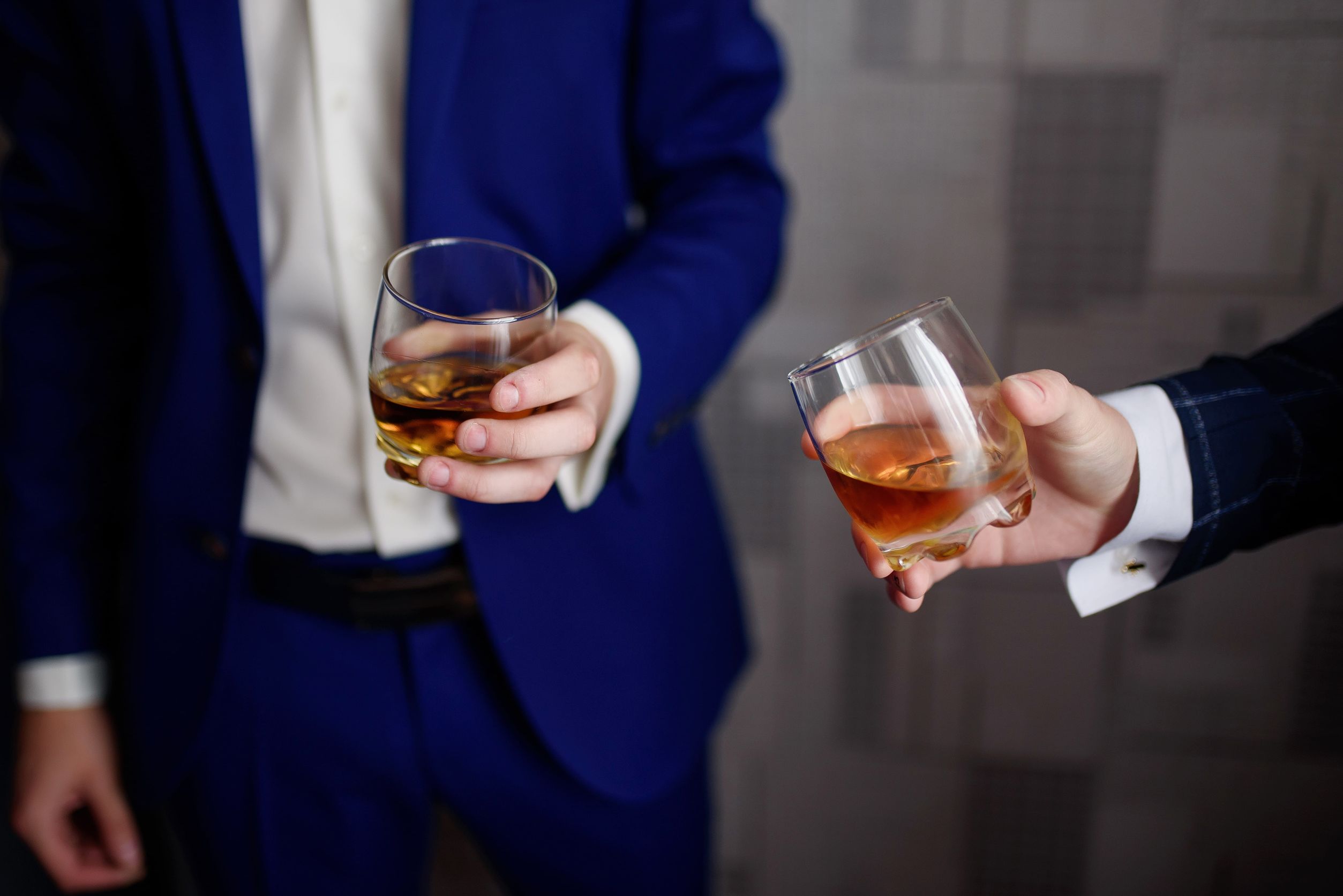
But Taiwan's relationship with whisky did not stop at importing it. In 2005, the King Car Group — better known worldwide and especially in the Middle East for its coffee Mr. Brown — built a distillery in the clean, rain-heavy landscape of Yilan County, on Taiwan's northeastern coast. What emerged from that quietly audacious experiment was Kavalan Whisky.
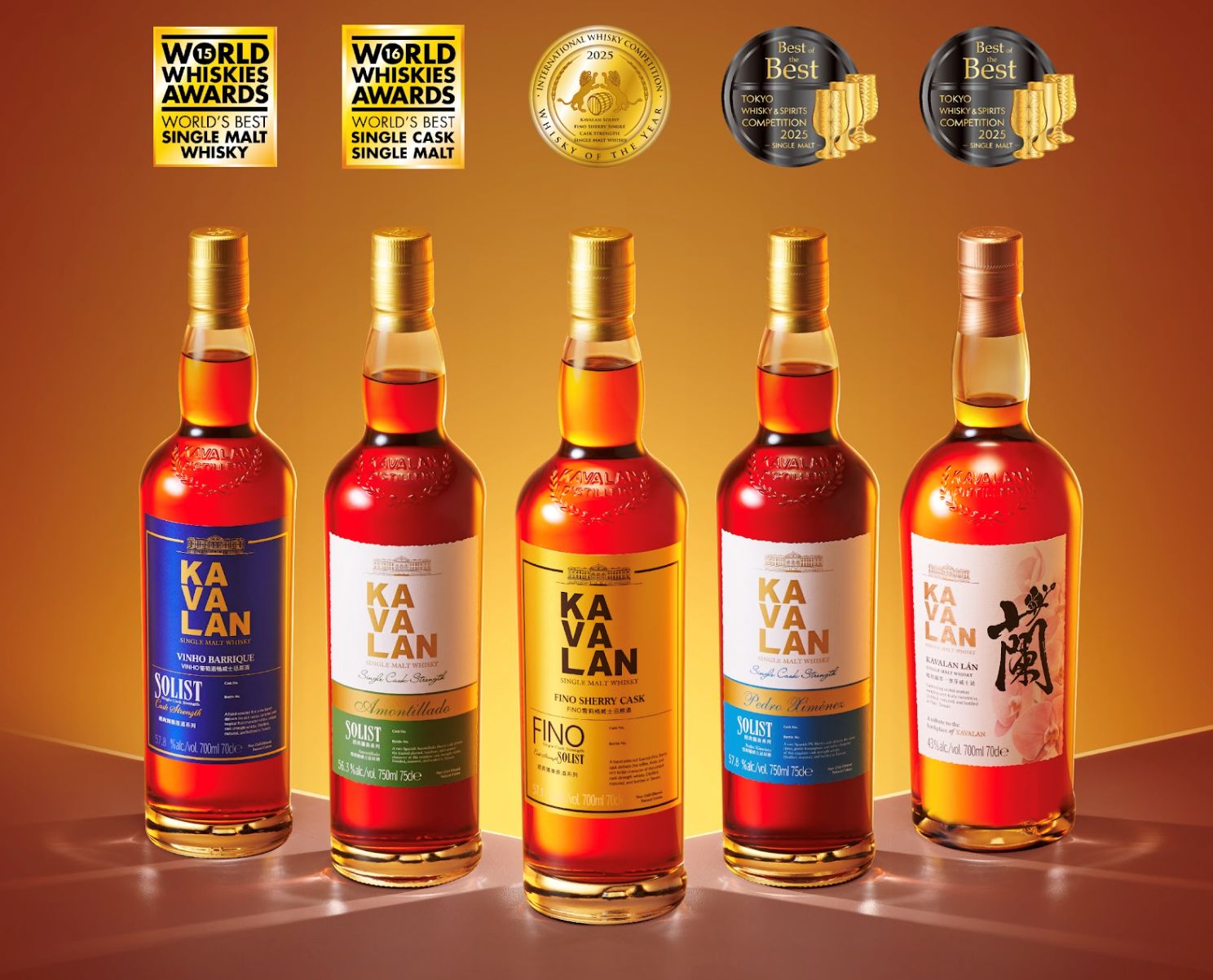
Distilled in Yilan County, northeastern Taiwan, Kavalan benefits from two geological gifts: mountain spring water of extraordinary purity, and a subtropical climate that accelerates the interaction between spirit and oak barrel. While a Scotch malt might slumber in a warehouse for twelve years, Kavalan's casks breathe and sweat in Taiwan's heat and humidity, achieving a comparable depth in a fraction of the time. With its tropically fruity character and none of the briny notes one associates with its Scottish cousins, Kavalan has won medals at the World Whiskies Awards and drawn comparisons to some of Scotland's most revered expressions.

This warm, generous, and unmistakably Taiwanese whiskey has also won the hearts of numerous Korean and Japanese whiskey lovers. So next time you’re in Taiwan, why not learn the island's terrain and climate with your tongue and a tumbler?

Beer: The Soul of the Hot Stir-Fry Kitchen
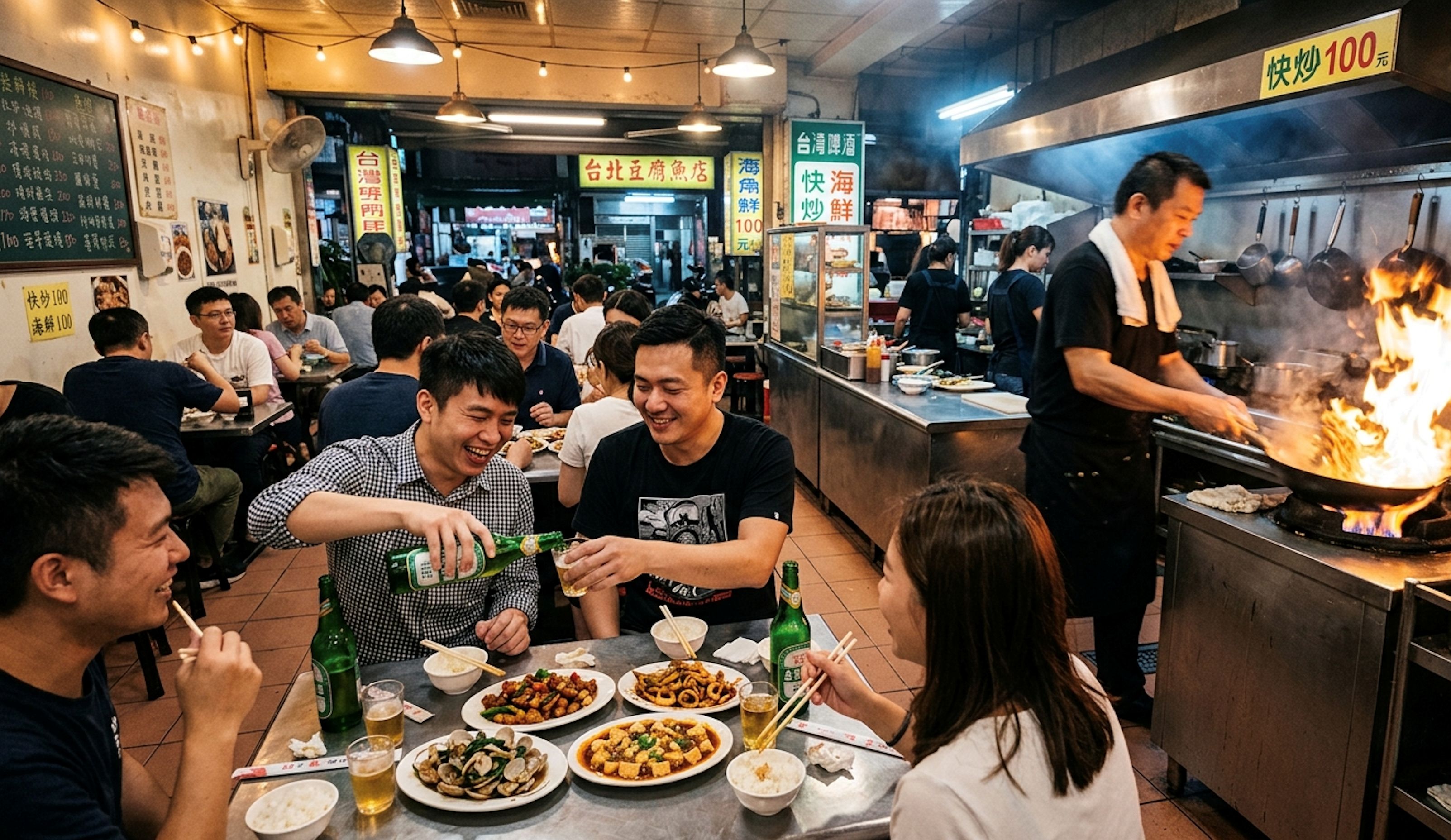
No self-respecting account of Taiwanese drinking culture skips the beer. And no experience of Taiwanese beer is complete without the context in which it is usually consumed: a 熱炒 (rè chǎo) restaurant, which translates politely as "hot stir-fry" and means, in practice, a beautifully chaotic open-fronted kitchen where orders arrive fast, woks roar, and cold beer is more structural than optional.
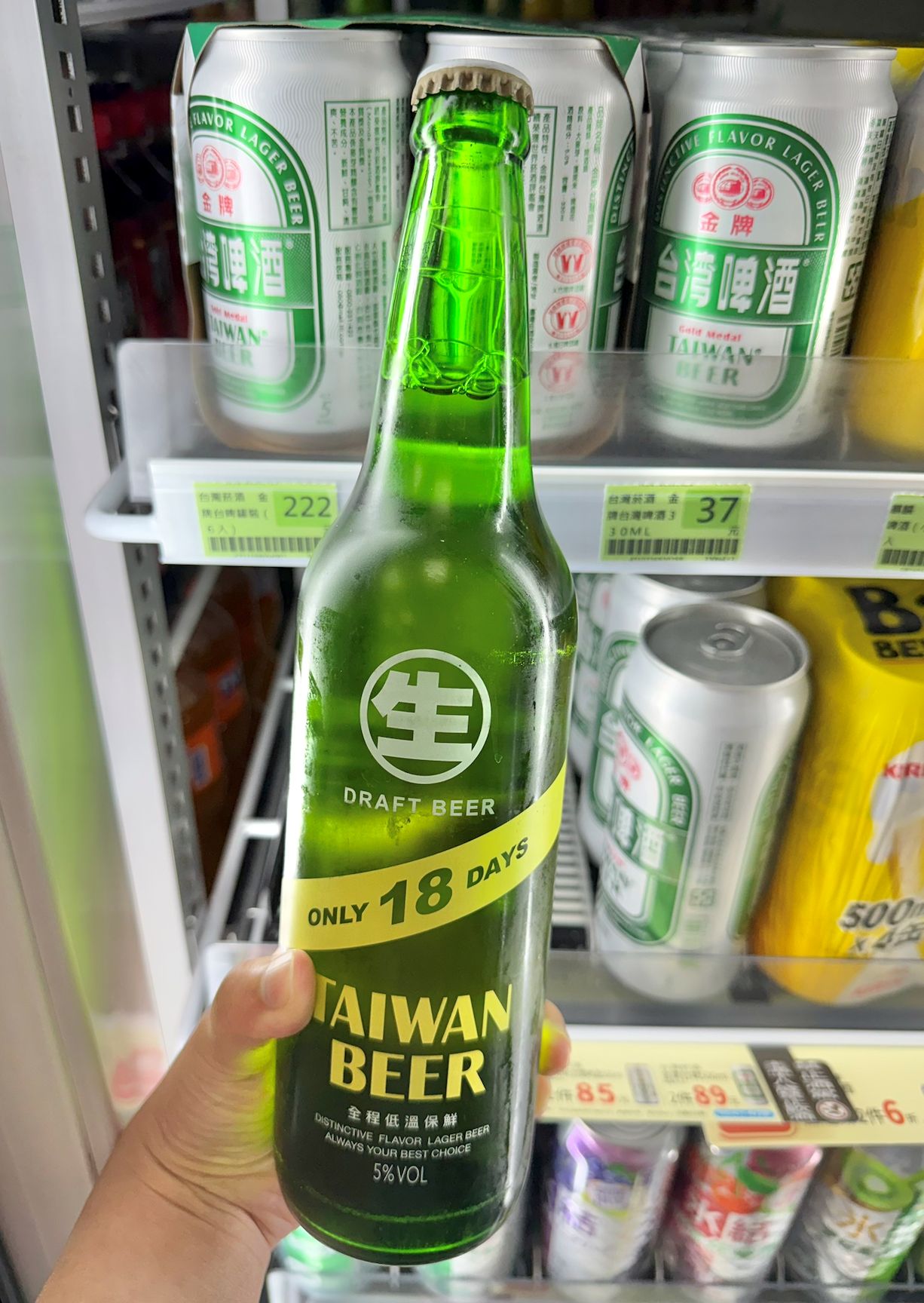
The undisputed sovereign of this environment is Taiwan Beer, the island's national brand, instantly recognisable by its green label and golden liquid. Taiwan Beer has been produced since the Japanese colonial era and occupies a place in the national imagination that transcends mere brand loyalty: it is simply part of the furniture of Taiwanese life. Its classic lager — clean, slightly malty, and best encountered ice-cold — has been joined over the decades by a smoother Gold Medal variant and several fruit-infused seasonal editions. But the true prize, and the one that inspires genuine devotion, is the 18-Day Fresh Draft Beer.
Unfiltered and unpasteurised, Taiwan Beer's 18-day fresh draft has an expiry window of just 18 days from brewing. It is therefore never exported and rarely strays far from the island. This is not a marketing conceit but a promise of freshness. To drink it in Taiwan is to taste something genuinely unavailable anywhere else on earth.
Going Deeper: The Soul Spirits of Taiwan
For those who want to move beyond the internationally legible malt whisky and craft lager, Taiwan offers a set of drinks that are harder to find outside the island but far more revealing of its character. These are the spirits and ferments rooted in grain, ceremony, and history.
Rice Wine: The Water That Cooks With You
If you have ever eaten a bowl of sesame oil chicken (麻油雞) or warmed yourself with ginger duck soup (薑母鴨) on a Taiwanese winter evening, you have already tasted rice wine without noticing. 米酒 (mǐjiǔ), Taiwan's rice wine, is the foundational liquid of the domestic kitchen. It goes into marinades, deepens broths, and is poured with the unconscious ease that olive oil gets poured in a Mediterranean home. It is not something you drink neat but something you cook with, and it is utterly irreplaceable.

In the late 1990s, Taiwan's accession negotiations for the World Trade Organisation required the government to raise taxes on rice wine, dramatically increasing its price. The announcement triggered what can only be described as national mild hysteria: supermarket shelves were stripped bare, quantities hoarded, and the incident — subsequently dubbed the "rice wine chaos" (米酒之亂) — entered cultural memory as evidence of just how deeply embedded this humble liquid is in ordinary Taiwanese life. When a country panics about the price of a cooking ingredient, that ingredient is not merely convenient. It is essential.
Kinmen Kaoliang: Fire from the Frontline

Few spirits carry as much history in a single bottle as Kinmen Kaoliang. Distilled from sorghum on a small Taiwanese archipelago sitting just four kilometres off China, this government-produced baijiu-style spirit was born in the shadow of war. Its distillery was established during the Cold War era when Kinmen was one of the most heavily fortified, frequently shelled pieces of territory on earth. Today, the spirit ages inside the 88 Tunnel system (八八坑道), a network of underground military bunkers repurposed as naturally temperature-controlled maturation vaults. History, quite literally, flavours every sip.

The standard expression is bottled at 58% ABV: clear, aromatic with roasted grain, and entirely unapologetic about its heat. For generations of Taiwanese men who completed their mandatory military service on this remote outpost, carrying a few bottles home upon discharge became a rite of passage: a keepsake of hardship, youth, and solidarity, saved for decades and opened in the company of those who understood exactly what it meant to earn them.
Gān bēi, the glass is waiting!
Taiwan's drinks industry has matured from local necessity into global ambition. Kavalan competes at the world's most prestigious competitions. Kinmen Kaoliang is available across Asia and in specialty shops worldwide. But the truest experience remains on the island itself: at a table with good food, good company, and someone offering to pour.
Warning: Enjoy responsibly | 18+ Only | Don’t Drink and Drive
