

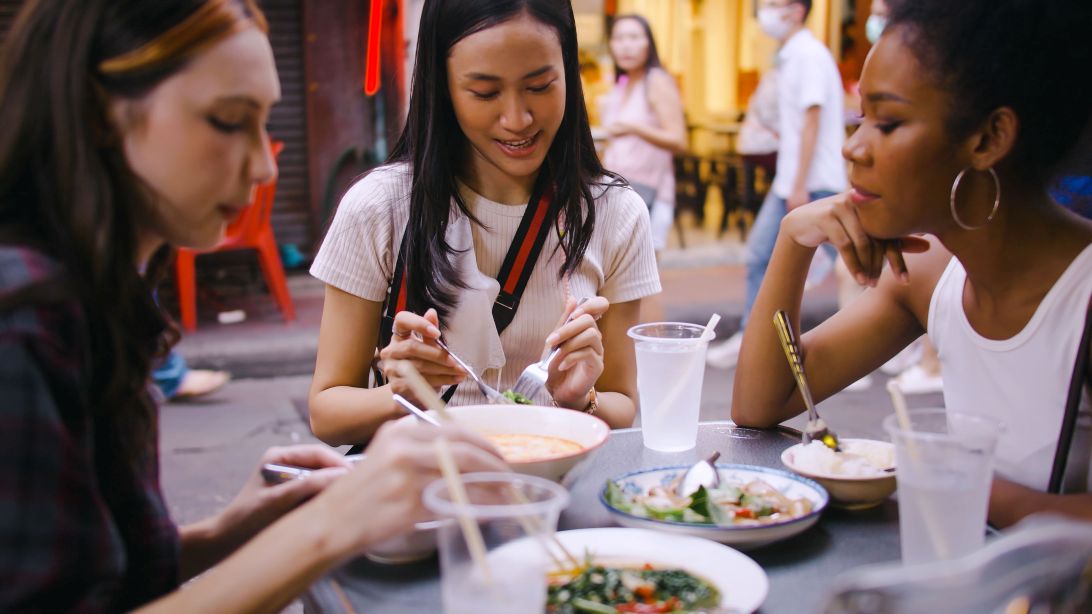
Taiwan’s food scene has long been celebrated in travel guides and YouTube videos: the sizzling night markets, the endless bubble tea flavors, and the famous beef noodle soup. Yet for foreigners who call Taiwan their home— expats, students and immigrants alike — the most memorable dishes aren’t always the flashy ones. They’re the humble, comforting foods found in breakfast shops, street stalls, and family kitchens. They are the flavors that quietly define daily life.
Of course, not every Taiwanese dish is universally loved. Some local favorites, like stinky tofu, chicken feet or pig blood cake, can be a little too adventurous for new arrivals. But beyond those headline-grabbing curiosities lies another side of Taiwanese cuisine: simple, heartwarming, and deeply satisfying. These are the dishes that foreign residents not only enjoy but also introduce to visiting friends with genuine enthusiasm.
To discover what truly wins expat hearts, we spoke with some long-term foreigners living in Taiwan and asked them which Taiwanese foods they find themselves craving week after week. If you ever visit Taiwan and want a bite of local but not too adventurous taste, this article will surely be your go-to list!
The Beloved Breakfast Classic: Taiwanese Omelette (蛋餅, dàn bǐng)

What surprises many newcomers is how ritualized breakfast culture is in Taiwan. Locals line up at their favorite shop every morning, chatting with the owner, ordering milk tea and dàn bǐng almost by muscle memory. For expats, joining this daily rhythm becomes an unspoken way of feeling part of the neighborhood.
And if Taiwan had a national breakfast, it would be the Taiwanese omelette(蛋餅, dàn bǐng), also known as the egg crêpe. Found in nearly every breakfast shop, this simple dish wraps a fried egg in a pancake that is crispy on the outside yet soft and chewy on the inside. Often filled with cheese, corn, or ham, dàn bǐng feels both familiar and exotic to expats in Taiwan: a bit like a cross between a French crêpe and a breakfast burrito.
Many foreigners say they were first drawn in by its versatility. “You can get it crispy or soft, spicy or mild. And there are just so many stuffing options to choose from, my favorite is mayo-tuna with hash brown. On days when I feel a bit self-conscious, I get the ones with veggie salad. It’s comforting without being heavy,” says Joe, a Canadian engineer in Kaohsiung. Served with soy sauce or sweet chili, it’s the perfect morning fuel before work or class.
Dumplings: Comfort Food That Needs No Translation (水餃, shuǐ jiǎo)
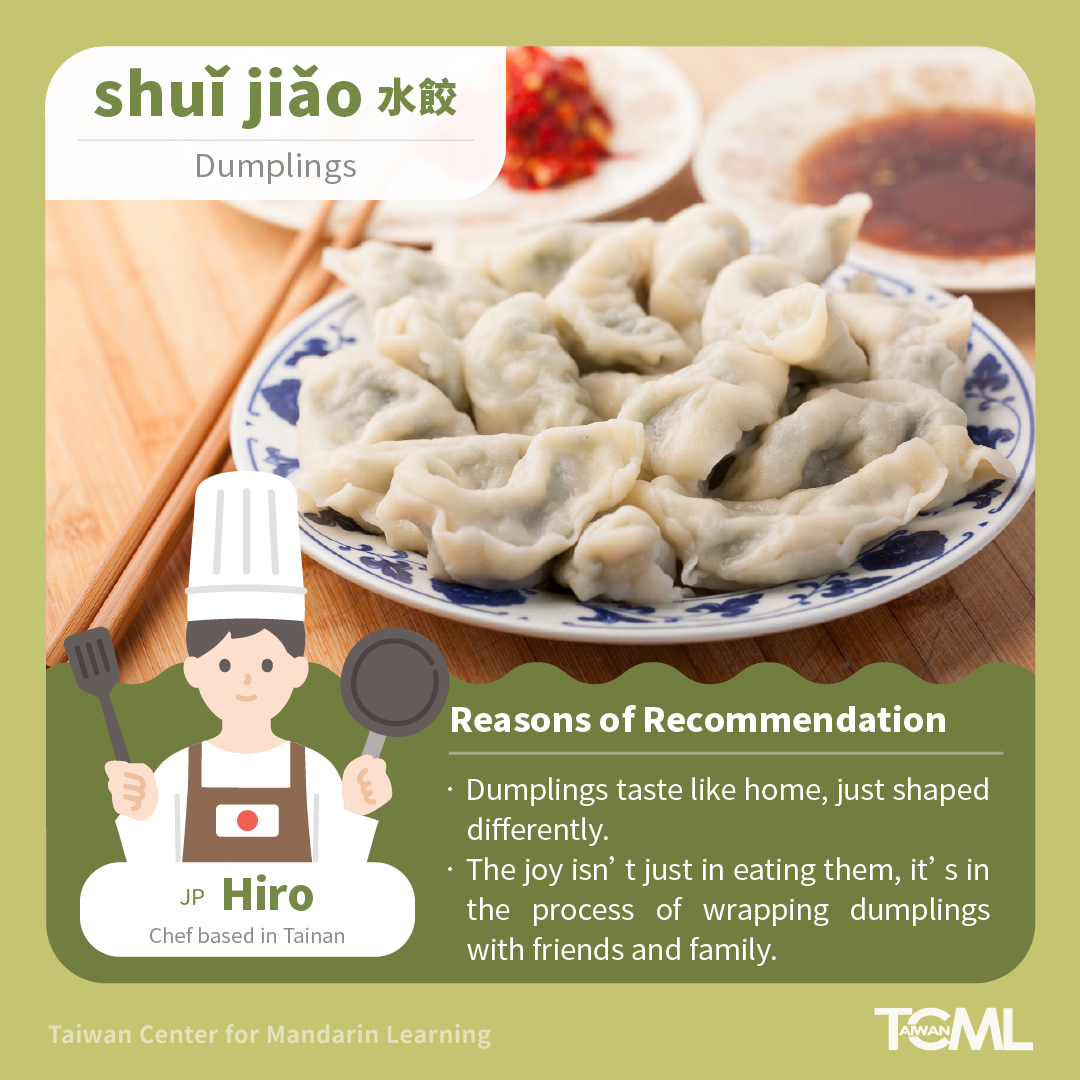
Few foods bridge cultures as easily as dumplings. In Taiwan, dumplings are an everyday staple, eaten boiled, steamed, or pan-fried. For many foreigners, they taste like home, just shaped differently. “I think of them as the Taiwanese cousins of Japanese gyoza, Polish pierogi or Italian ravioli,” says Hiro, a Japanese chef who’s worked in many parts of the world and has now settled in Tainan for love and family. “They remind me that comfort food looks different in every country, but the feeling is the same.”
These bite-sized parcels of comfort can be found everywhere in Taiwan, from family-run dumpling shops to 24-hour dumpling chains. While making dumplings from scratch isn’t something every family does regularly, it remains a cherished tradition for some households, especially during holidays or family gatherings.
As dumpling wrapping can be rather time-consuming and takes substantial teamwork, it’s often turned into a social event rather than a chore. Relatives or friends gather around a table, chatting and laughing while spooning in fillings and lining up the finished pieces like little crescents ready for boiling. The joy isn’t just in eating them, it’s in the act of creating something together. During Lunar New Year, some Taiwanese families even gather to fold dumplings together, a gesture that symbolizes prosperity and reunion.
For foreigners, this sense of togetherness makes dumplings especially memorable. “My Taiwanese friends once invited me to a dumpling night,” says Hiro, “everyone had their own role, from rolling, stuffing to folding. It felt like being part of a family.”
What’s even better is that there’s no shortage of choice: classic pork-and-cabbage sprinkled with occasional shrimp or corn, or vegan options with chives and mushrooms. Many expats admit that their go-to dumpling shop soon becomes a second kitchen. “It’s affordable, filling, and you can eat it any time of day,” laughs Hiro. “Honestly, I miss it whenever I travel.”
Silky and Sweet: Tofu Pudding (豆花, dòu huā)
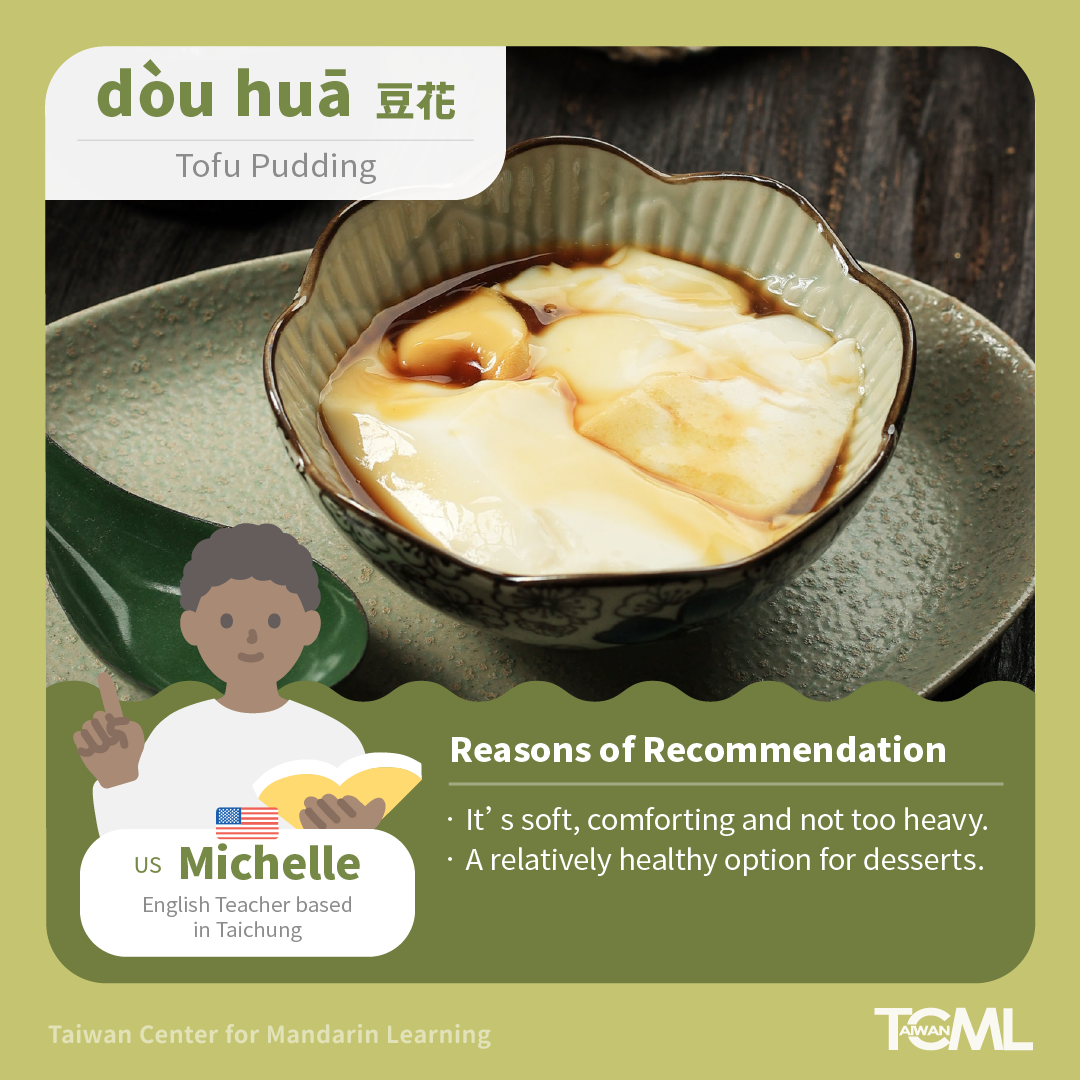
Tofu pudding, or dòu huā (豆花), is one of Taiwan’s most understated desserts. Its silky texture and gentle sweetness make it a favorite among foreigners who might shy away from overly sugary or oily desserts. Typically served with peanuts, red beans, or tapioca pearls, dòu huā can be enjoyed warm or cold depending on the season.
“I didn’t expect to love tofu as a dessert,” admits Michelle, an American English teacher who has lived in Taichung for five years. “But the first time I had dòu huā, it felt like something my grandmother would have made. It’s simple, soft, comforting and not too heavy. It’s my go-to dessert when I’m on a diet but craving sugar.”
Another reason foreigners adore dòu huā is its adaptability. During Taiwan’s humid summers, the chilled version offers instant, refreshing relief from the heat, while the warm ginger-syrup version in winter soothes both the body and mind.
A Sweet Fusion: Taiwanese Egg Tart (蛋塔, dàn tǎ)
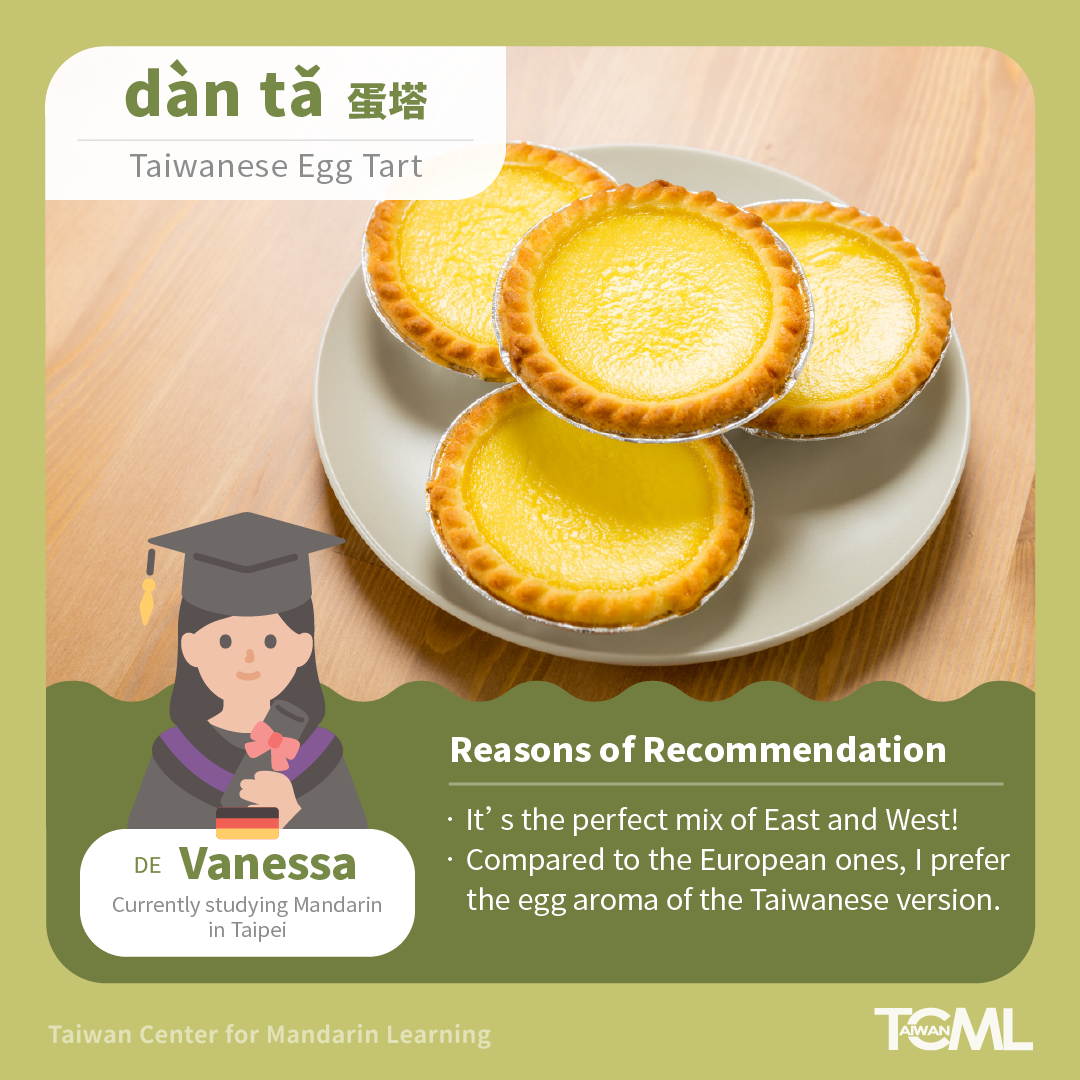
hile Portuguese pastel de nata are famous worldwide, Taiwan has developed its own version of egg tarts. Taiwanese egg tarts (蛋塔, dàn tǎ) are slightly less rich, with a sturdier crust and lighter, more solid custard. Found in bakeries across the island, the Taiwanese egg tart blends local and Western influences, just like much of modern Taiwanese culture.
“It’s the perfect mix of East and West,” says Vanessa, a Vietnamese-German student learning Mandarin in Taipei. “It tastes familiar, but the texture is lighter and you taste more of the egg aroma than the custard sweetness. The crust is firmer and very different from what we have in Europe, yet it’s so much better. I buy one almost every afternoon, studying Mandarin characters burns a lot of calories, after all.”
Dàn tǎ also reflect Taiwan’s evolving dessert culture, where European aesthetics meet local taste. They pair just as beautifully with a latte as with traditional oolong tea. For expats, this fusion captures Taiwan’s openness, a place where cultures blend naturally, one bite at a time.
Warmth in a Bowl: Glutinous Rice Balls (湯圓, tāng yuán)
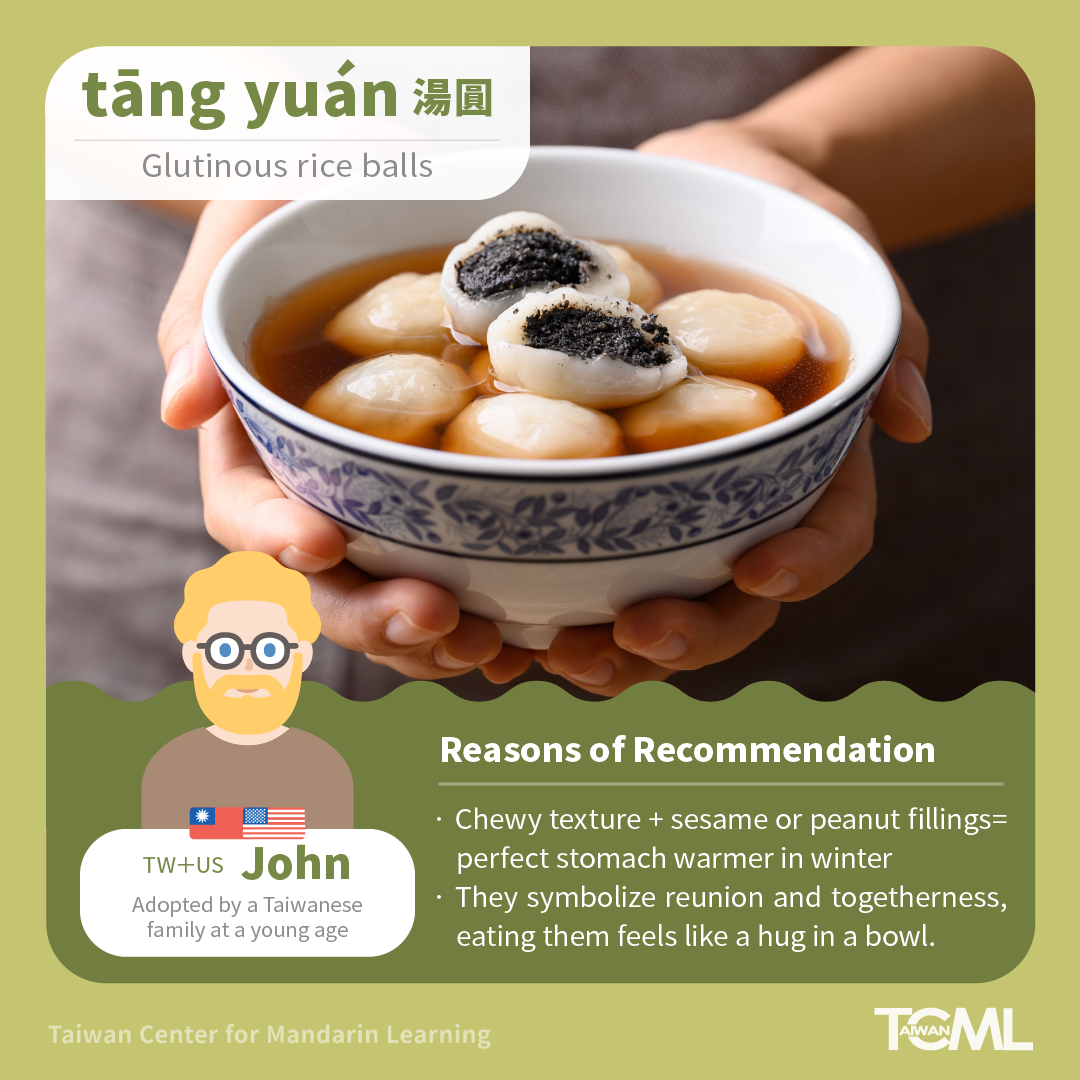
No list of Taiwanese comfort foods would be complete without tāng yuán(湯圓), glutinous rice balls often served in a sweet soup. Traditionally eaten during the Lantern Festival or family celebrations, tāng yuán symbolizes reunion and togetherness, which is an idea that resonates deeply with many foreigners living far from home.
The chewy texture may surprise some at first, but it quickly becomes addictive. The black sesame or peanut fillings burst with nutty flavor, while the warm, sweet soup offers comfort on chilly nights. “It feels like a hug in a bowl,” says John, an American linguist who was adopted by a Taiwanese family at a young age and now migrates between Taichung and Chicago.
Interestingly, many expats say tāng yuán reminds them of winter holiday desserts from their own cultures, such as mochi, rice pudding, or gingerbread, making it emotionally relatable despite its unfamiliar form. That’s perhaps why it has become a popular comfort food for those spending the holidays away from family.
Food as a Bridge to Everyday Taiwan
Through these dishes, foreigners don’t just discover new flavors, they also glimpse the rhythms of Taiwanese life. The morning rush to the breakfast shop for a mouthful of dàn bǐng, the lunchtime chatter over shuǐ jiǎo, the late-night dessert run for dòu huā all reflect a society that values connection through food.
Unlike the culinary extremes often highlighted on social media, these are dishes that speak to warmth, balance, and belonging. They are approachable, flavorful, and above all, deeply human. Expats who embrace them often say that eating like a local helped them feel less like outsiders and more like part of the community.
Food, in this sense, becomes a language of inclusion. Sharing a meal or even just learning to order in Mandarin can open doors to conversations, friendships, and small daily joys that no guidebook can fully capture.
If you are planning on exploring Taiwan beyond its tourist spots, these foods offer an authentic taste of local kindness and simplicity. As Joe the Canadian engineer puts it, “when you start craving dàn bǐng instead of a burger, that’s when you know Taiwan has truly become home.”
Vocabulary used in this article:
- 蛋餅 (dàn bǐng): Taiwanese omelette
- 水餃 (shuǐ jiǎo): dumpling
- 豆花 (dòu huā): tofu pudding
- 蛋塔 (dàntǎ): Taiwanese egg tart
- 湯圓 (tāng yuán): glutinous rice balls
