


The first thing that hits you might be the sound. A tinny, cheerful melody drifting down a side street at dusk, somewhere between a music box and a fairground organ. Or it might be the sight: hundreds of scooters idling at a red light, engines humming in unison, ready to surge forward the instant the signal turns green. For the traveler stepping off the plane for the first time, Taiwan announces itself in sensory fragments long before it reveals its temples, night markets, or mountain trails.
Ask a local about any of this, though, and you'll likely get a shrug. The melody? Just the garbage truck. The scooters? Just Tuesday.
That gap, between what locals barely notice and what visitors can't stop photographing, is where Taiwan's real charm lives. Beyond the postcard scenery, the island's most memorable moments often unfold in the small, unglamorous rituals of daily life. Here are five slices of the ordinary that tend to leave foreign visitors, students, and even businesspeople quietly astonished.
The Receipt That Might Make You Rich
Few other countries in the world do a grocery run come with a shot at winning ten million New Taiwan Dollars (approx. 316,000 USD), but in Taiwan, every printed receipt doubles as a lottery ticket. It's called the Uniform Invoice system, and it was born from a wonderfully pragmatic problem: how do you stop shopkeepers from quietly skipping the register to dodge taxes? The government's answer, decades ago, was to turn the humble receipt into something people actually wanted: a chance at a windfall.
Every two months, on the 25th, winning numbers are announced, with prizes ranging from a modest cash-back to a genuinely life-changing sum. Anyone holding a winning receipt can claim their prize at designated banks or convenience stores within about three months — including foreign visitors, provided they present the original receipt along with a passport, residency card, or entry permit. Yes, that means a receipt from a bubble tea bought on your last day in Taipei could, in theory, turn into a fortune.

What once required flipping through a newspaper and squinting at columns of numbers has now gone fully digital. Scan a mobile barcode at checkout, and your receipts are automatically filed and checked against winning numbers in the cloud. Winnings can even be deposited straight into local bank accounts or redirected to charity. It's a small piece of infrastructure, but it says a lot about Taiwan: a society that solves serious problems, like tax evasion, with a wink and a bit of everyday delight.
Where Cute Conquers the Corporate World
Step into almost any storefront, government office, or public campaign in Taiwan, and you'll be greeted by a small army of cartoon mascots: wide-eyed, round-cheeked, impossibly friendly. This aesthetic isn't confined to shopfronts, it has quietly infiltrated something far more unexpected: the workplace group chat.
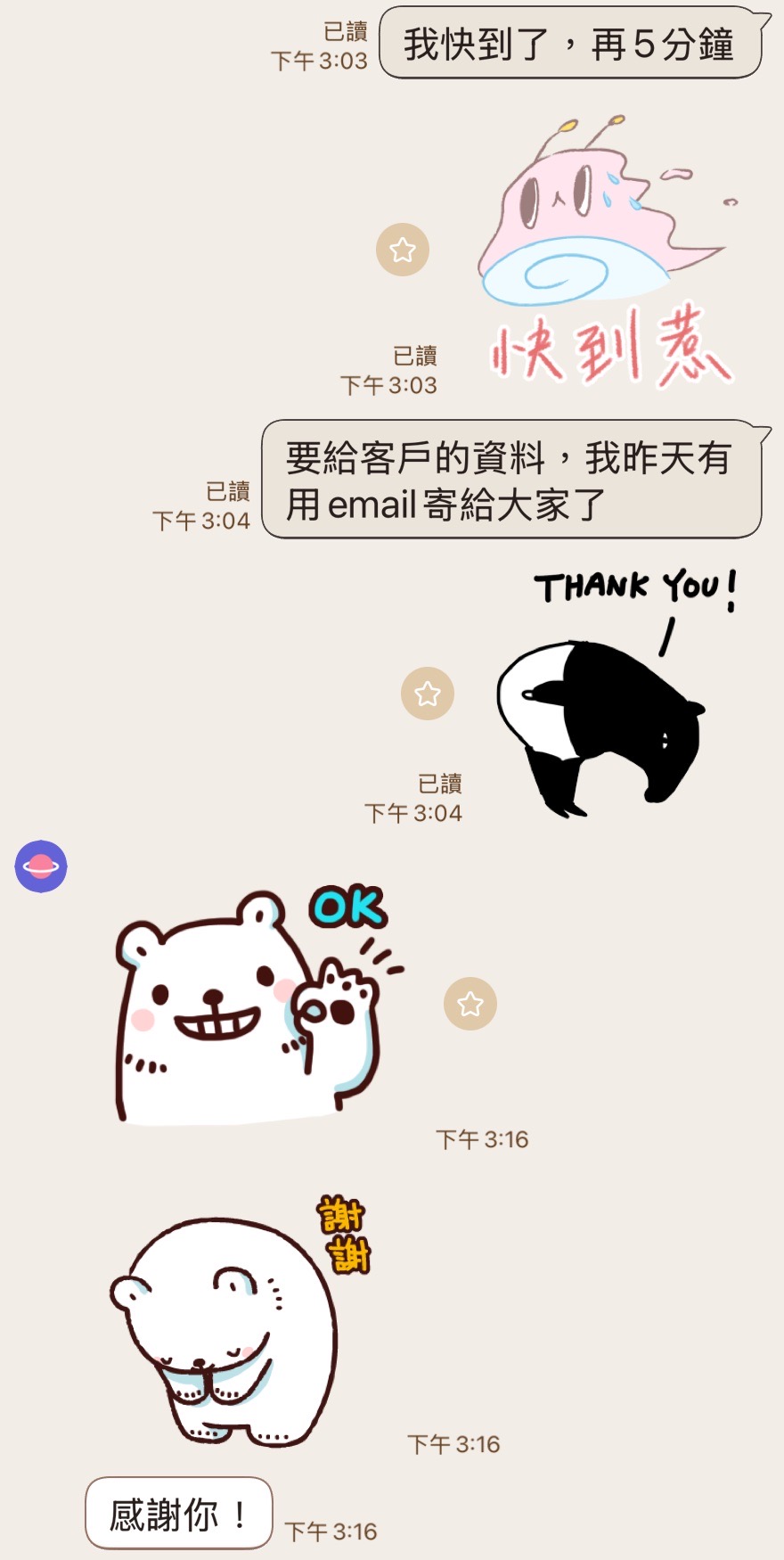
In many countries, sending a cartoon sticker to your boss would raise eyebrows about professionalism. In Taiwan, it's practically expected. A sticker can say "got it" to a supervisor, "I'm almost there" to a client, or wrap up a conversation with a cheerful, wordless thank-you — all without the awkwardness of typing it out. Even in industries known for formality, and even among men in senior positions, a well-timed cute sticker is treated less as unprofessional and more as social lubricant, smoothing over the small frictions of daily communication.
It's a subtle but telling detail: a culture that has found room for softness and warmth inside its most buttoned-up spaces, and sees no contradiction between getting business done and doing it with a literally illustrated smile.
The River of Scooters
Few sights capture Taiwan's urban rhythm quite like the scooter. Or rather, the sheer, overwhelming number of them. Visitors arriving in any Taiwanese city are often stopped in their tracks by what locals have nicknamed the "scooter waterfall": a dense, flowing mass of two-wheeled traffic pouring through intersections, most famously at Taipei Bridge, where the sheer volume has turned a daily commute into something close to a spectacle.

The scooter's dominance isn't an accident. Even with a transit network as extensive as Taiwan's, nothing beats a scooter for the last mile — weaving straight to a doorstep down an alley no bus route would ever cover. Scooters are cheap to buy and cheap to run. And Taiwan's cities are riddled with narrow alleys and tight corners where a small, nimble vehicle can slip through (and park) far more easily than a car. Over time, the scooter has become more than transportation; it's a symbol of personal freedom and efficient, unencumbered living, woven into the rhythm of daily life for millions.
Even here, Taiwan is quietly reinventing tradition. Electric scooter brands like Gogoro have turned battery-swap stations into a common streetside fixture, letting riders trade a depleted battery for a full one in seconds. It's a glimpse of a very old habit, the scooter commute, being reimagined for a greener future.
Nope, It's Not the Ice Cream Truck
For decades, the world over, a truck playing music through the streets has meant one thing: ice cream. So it's little wonder that foreign residents in Taiwan, Westerners especially, often share some version of the same embarrassing story: hearing a familiar tinkling tune drift through the neighborhood, grabbing their wallet, and dashing outside, only to find not a freezer full of popsicles, but a garbage truck.

Taiwan's yellow garbage trucks make their rounds each evening playing classical melodies, most famously Beethoven's "Für Elise" or "A Maiden's Prayer," a detail so charmingly unexpected that it once earned a feature in The New York Times.
The music is the visible tip of a remarkably disciplined waste system. Residents don't leave bags at the curb, they carry their trash out in person and hand it directly into the truck when they hear the signature tune. A recycling truck typically follows close behind, and here things get serious: recyclables such as bottles, paper, and metal, along with food scraps, must be sorted and handed to sanitation workers, a level of rigor that has helped push Taiwan's recycling rate to roughly 60%, among the highest in the world. In Taipei and New Taipei City, general waste must go into government-designated bags, with the cost of disposal baked directly into the price of the bag itself: a "pay as you throw" system that quietly nudges everyone toward producing less trash in the first place.
One unexpected side effect: public trash cans are famously scarce on Taiwanese streets, a detail that puzzles many first-time visitors. But it's precisely because so little waste ends up loose in public that Taiwan's cities stay so remarkably clean, and, in a humid subtropical climate, keep pests at bay. Along the way, the evening ritual of waiting for the truck has become an accidental community gathering, a few minutes when neighbors pause to chat before heading back inside: a small, unplanned expression of the civic-mindedness and environmental awareness woven into daily life here.
The Nap That Refuses to Grow Up
In much of the world, the midday nap is something you outgrow somewhere around kindergarten. In Taiwan, it never really goes away. From elementary school through high school, a dedicated nap period is built into the daily schedule: lights off, heads down on desks, the room falling into an obedient hush. Many Taiwanese offices carry the tradition forward into adulthood, complete with dimmed lights and a collective, unspoken agreement to stay quiet for twenty minutes.

For visitors used to power-through workdays, the sight of an entire office pausing to nap can be startling. But in Taiwan, the midday rest is taken seriously as a tool for sharper focus and better performance later in the day, seriously enough to have spawned its own micro-industry of nap pillows and reclining office chairs. "Lights off, head down" isn't just a childhood memory shared by nearly everyone who grew up here, it's a habit that follows people well into their careers. So the next time you spot someone quietly asleep at their desk somewhere in the world, there's a decent chance they picked up the habit in Taiwan.
An Island Fluent in the Small Things
None of these five details, a lottery hidden in a receipt, a sticker sent to a boss, a river of scooters, a garbage truck playing Beethoven, an office gone quiet at noon, will appear on a list of Taiwan's must-see attractions. And yet, together, they say more about the island's character than any single landmark could: a place that is endlessly adaptable, quietly considerate, and unmistakably warm, even in its most mundane routines.
These aren't performances staged for visitors, they're simply how Taiwan lives, day in and day out. But for anyone willing to look closely, whether a traveler chasing the perfect trip, a student weighing where to study abroad, or an entrepreneur scouting new ground, that everyday texture might be the most convincing invitation of all. Come see it for yourself. Taiwan's biggest surprises aren't hiding in the mountains or the museums. They're on the street corner, in the group chat, and in the receipt sitting in your pocket right now.
