

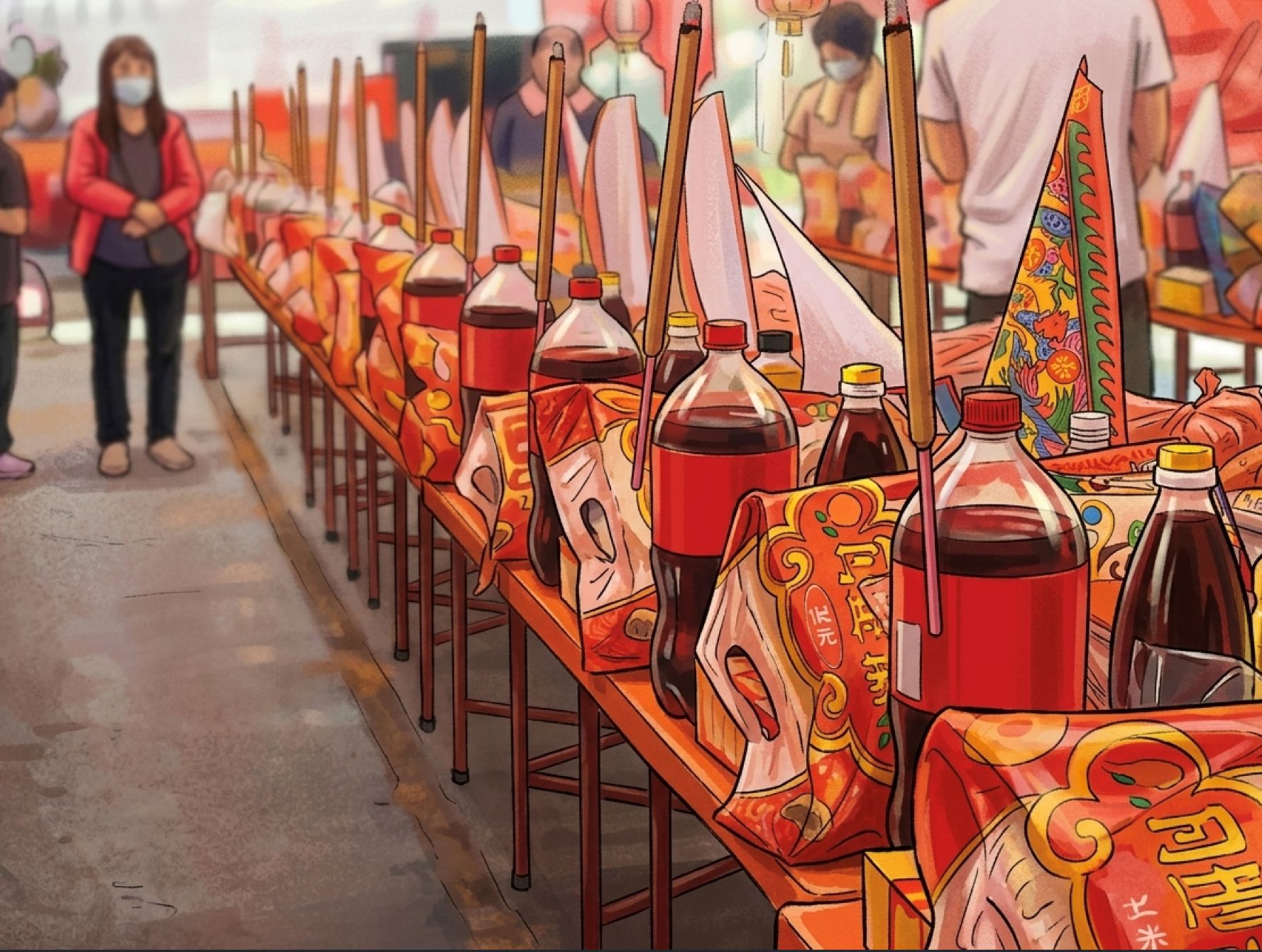
Every summer, somewhere between the humid heat of August and the first cool breath of autumn, Taiwan quietly changes its rhythm. Wedding halls go dark. New apartments sit unsigned. Sidewalks fill with folding tables piled high with roast chicken, fruit, and incense smoke curling into the evening air. For one lunar month, the island opens its door to the dead.
This is Guǐ Yuè (鬼月), Ghost Month, one of the most distinctive threads in Taiwan's cultural fabric. It begins on the first day of the seventh lunar month, when tradition holds that the gates of the underworld swing open and spirits are released to wander the human world for thirty days, before the gates close again at month's end. It is a season that rewards the curious traveler, because almost nowhere else on earth can you watch an entire modern, tech-driven society pause to feed its ghosts.
Ghost Month ≠ Taiwan's Halloween
Visitors often reach for a familiar comparison: "Oh, so it's like your Halloween." It isn't, and understanding why is the first step into the culture. Halloween is playful with all the costumes, candy, mock-scares, while Taiwan's Ghost Month grew from a very different root: a blend of Taoist cosmology and Buddhist compassion. In Taoist belief, the month centers on the birthday of the Earth Official(地官大帝), a deity who pardons the sins of the dead; in Buddhist tradition, it echoes the story of the monk Mulian, who tried to save his mother from the realm of hungry ghosts and, through the collective goodwill of the monastic community, ultimately succeeded. The two threads merged over centuries into a folk observance about feeding the hungry, honoring ancestors, and showing mercy even to souls no one remembers.
That's the emotional core of the season: not fear of ghosts, but empathy for them. Ancestors have descendants to look after them, but the gūhún yěguǐ(孤魂野鬼), namely the "lonely souls with no home to return to", have no one. Taiwanese custom holds that if these wandering spirits are welcomed, fed, and treated with courtesy, they'll pass the month peacefully rather than causing mischief. So during Ghost Month, people set an extra place at the table for the dead. Locally, ghosts are rarely called by the blunt word guǐ (ghost). They're hǎo xiōngdì(好兄弟, ‘Good Brothers’ or ‘Bro’ in English), a term that carries both wariness and warmth, a linguistic taboo turned into something almost affectionate.
A Month-Long Banquet for the Dead
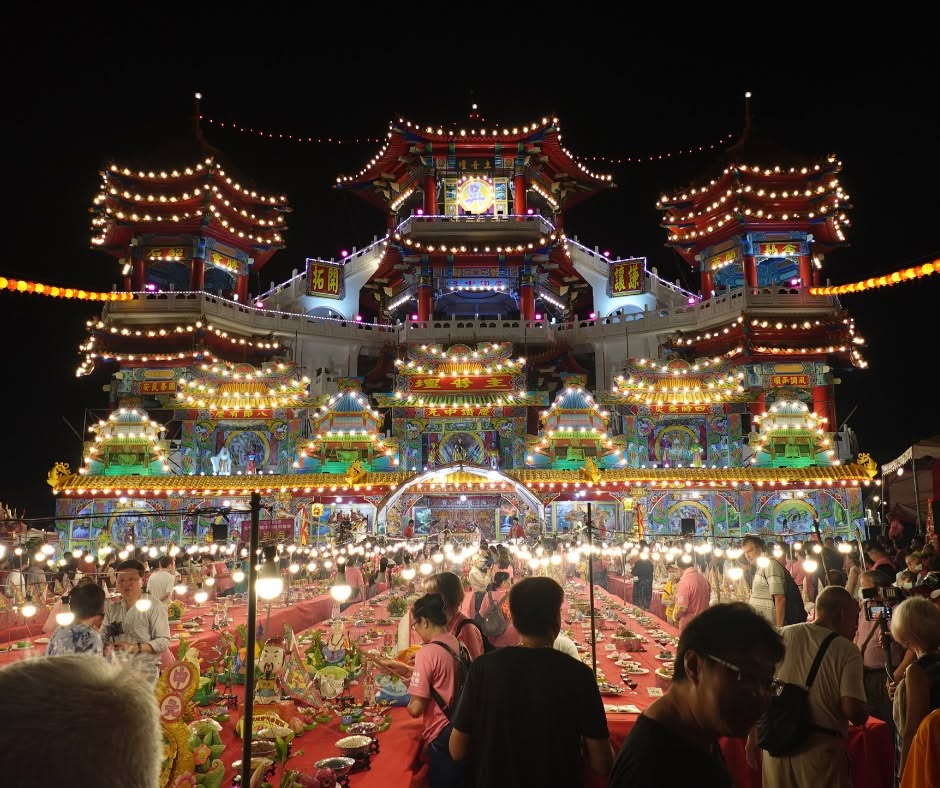
Walk through almost any Taiwanese neighborhood during Ghost Month and you'll see tables set up outside homes, shops, and office buildings, loaded with food, each dish stuck with a lit incense stick — a signal that the offering is open for spirits to enjoy. The custom is called pǔdù(普渡), "universal salvation," and it runs the length of the month, climaxing on the fifteenth day, Zhōngyuán Festival, when temples, apartment committees, and entire office towers coordinate offering schedules so everyone gets a turn.
The spread follows its own quiet grammar. A whole chicken, a whole fish, and a huge chunk of pork make the "three sacrifices", which must stay uncut and complete to show sincerity rather than insult. (After all, you never know how the wandering ‘good brothers’ died, and they might have body parts still missing…) Fruit is chosen for its lucky-sounding name in Mandarin or Taiwanese: oranges for good fortune, apples for peace. Pineapple, by contrast, is often left off Ghost Month tables. Its Taiwanese name sounds like "abundant arrival," which is exactly the kind of invitation nobody wants to extend to a hungry ghost, along with combinations of banana, plum, and pear, whose combined pronunciation sounds uncomfortably close to "please, everyone, come on in.”
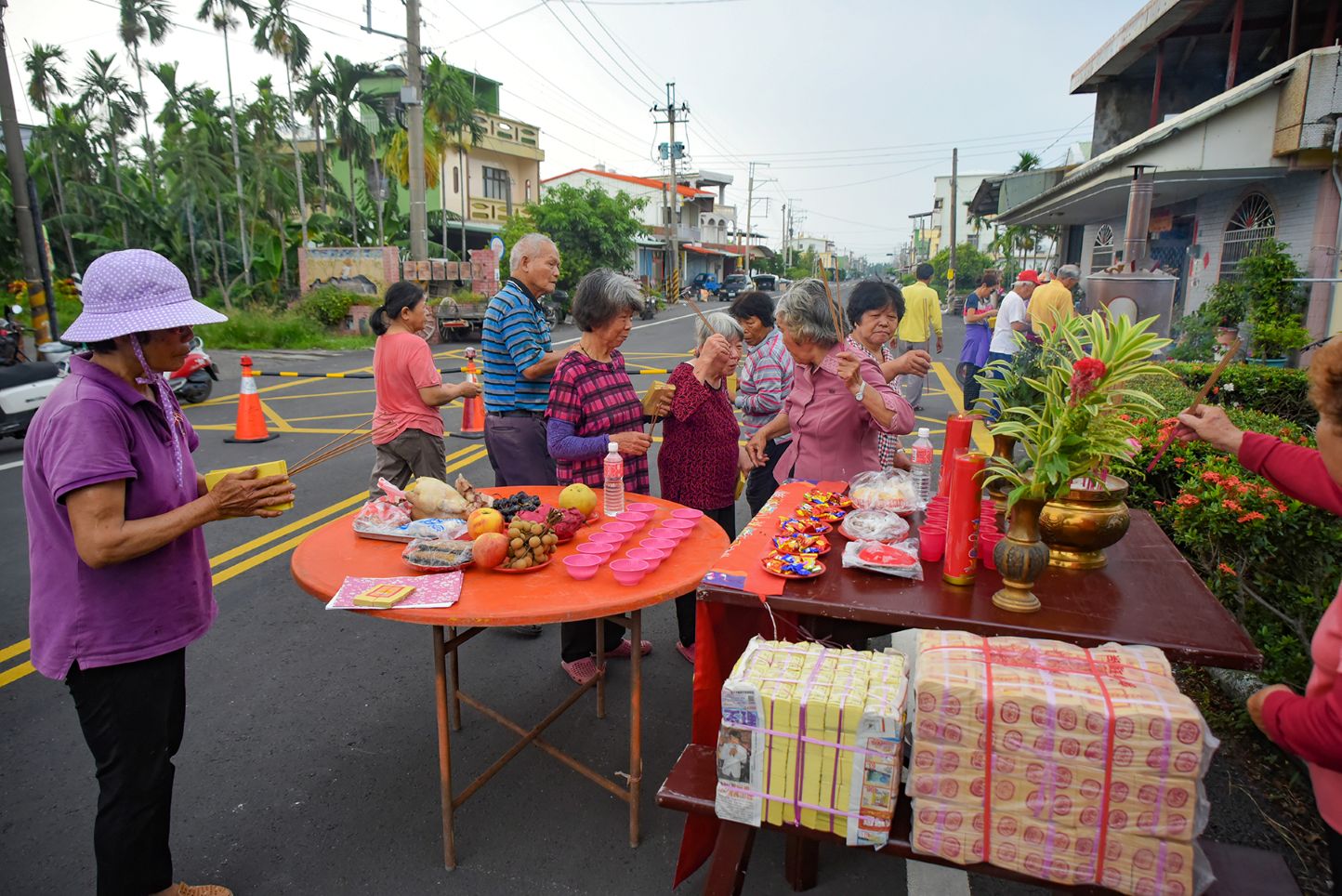
Some details feel almost like hosting distant, slightly unpredictable relatives: a basin of water and a fresh towel set beside the table, so travel-worn spirits can wash up before eating; a bowl of water-spinach soup left deliberately underdone, a polite way of saying "you're welcome to eat, but please don't overstay your welcome." And because so much food would otherwise go to waste, communities stack unopened canned goods and drinks into towering "canned-food pagodas": offerings that, once the ritual is complete, get redistributed to worshippers, neighbors, or charity.
Then there's Taiwan's most unexpected ghost-repellent: a children's snack. Green bags of Kuai Kuai (乖乖), a coconut-corn puff whose name literally means "be good, behave," have become a fixture not just on offering tables but on top of servers, ATMs, and lab equipment across Taiwan's tech industry year-round. The pun-based hope being that if the snack is "well-behaved," the machine will be too. During Ghost Month specifically, the same green bags appear on shrines and desks as a request that visiting spirits stay well-behaved as well. It's a wonderfully Taiwanese image: a nation famous for building the world's most advanced semiconductors, quietly trusting a bag of corn puffs to not only keep the servers running but also stop the wandering spirits from ‘trick-or-treating'.
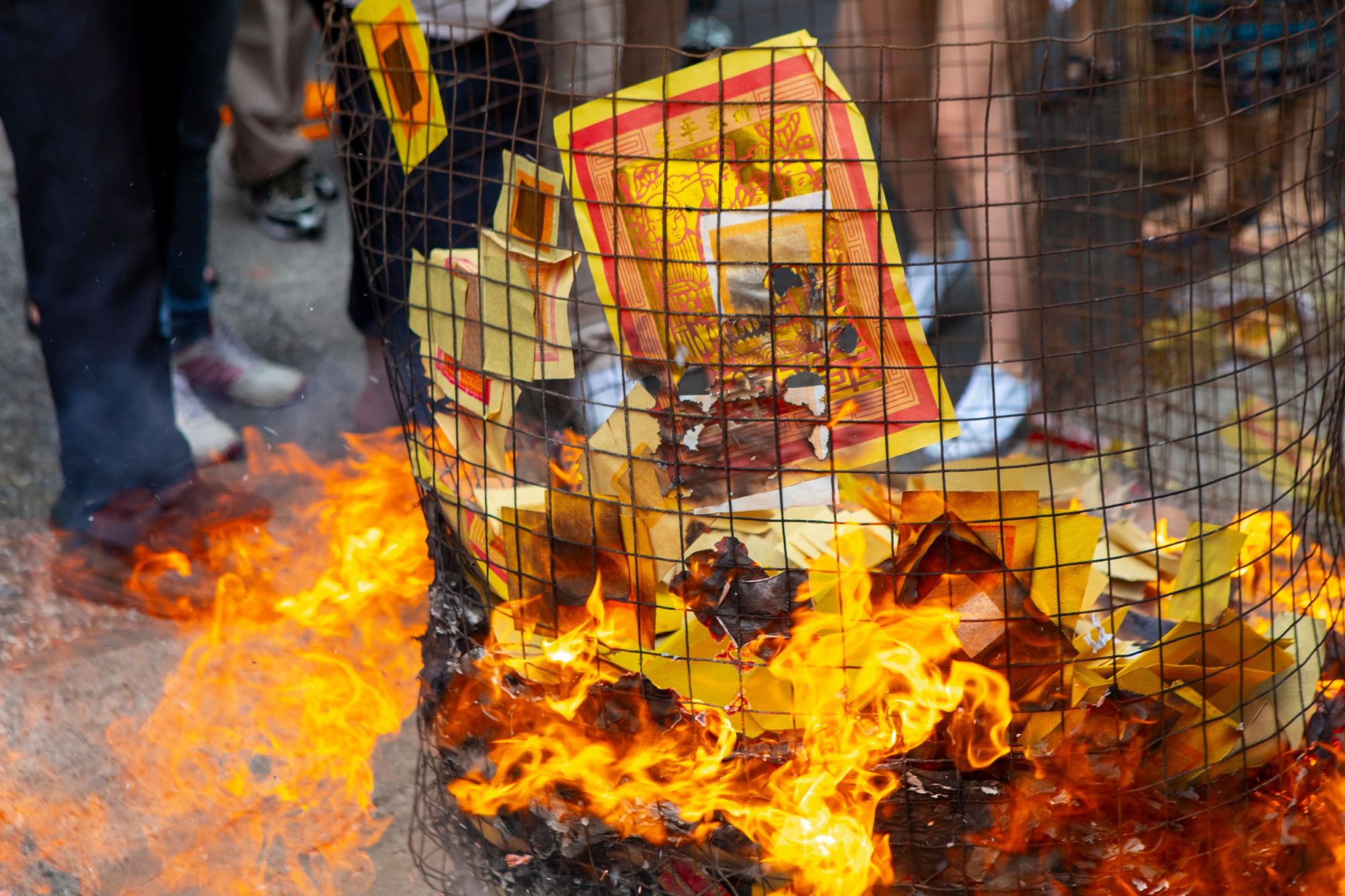
Alongside the food, families burn joss paper, ornate paper sheets patterned with gold and silver foil, meant to serve as currency in the afterlife. Ordinarily this is reserved for one's own ancestors, but during Ghost Month, Taiwanese households extend the gesture to unclaimed spirits as well, a kind of ritual charity for the dead. (International visitors sometimes unknowingly buy these papers as souvenirs, charmed by the gold foil. It’s worth knowing that, to Taiwanese eyes, they're not decorative stationery but something closer to funeral currency.) In recent years, environmental concerns have pushed many communities toward centralized incineration or virtual paper-burning, trimming the smoke without abandoning the gesture.
Climbing for Charity
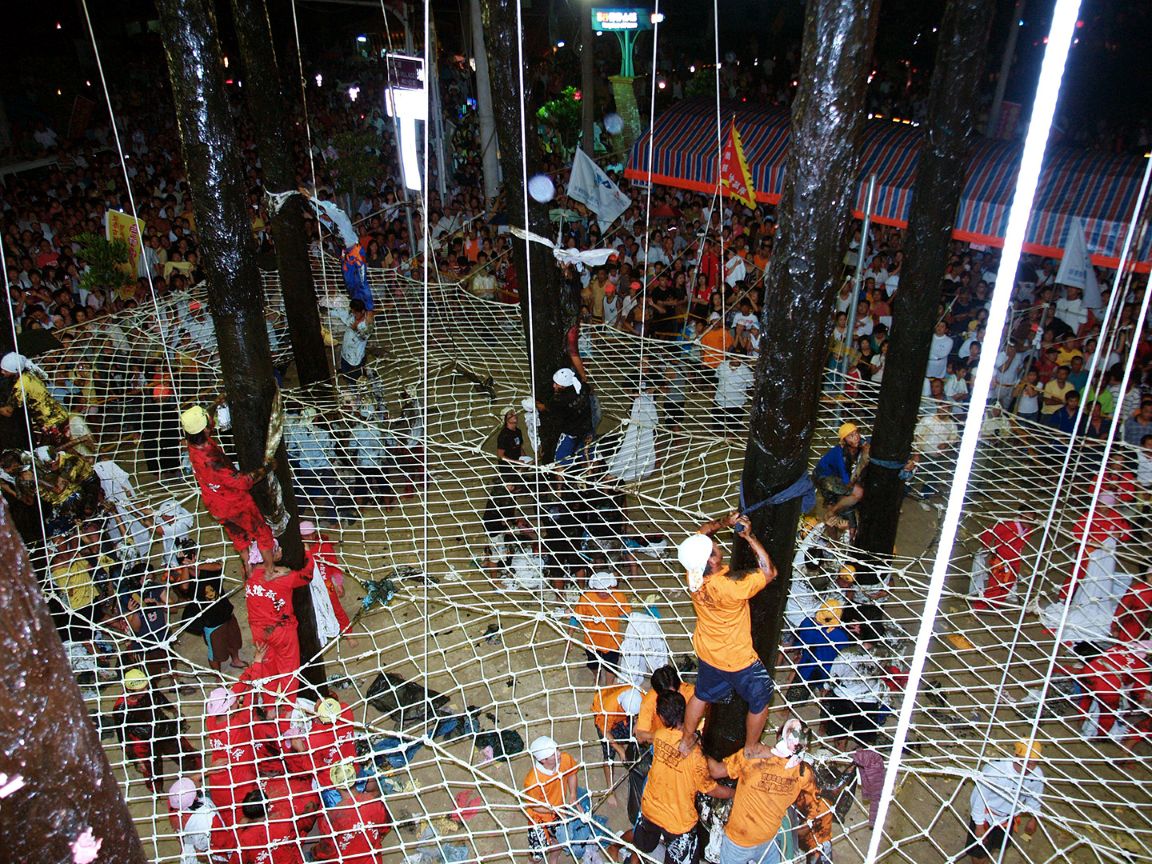
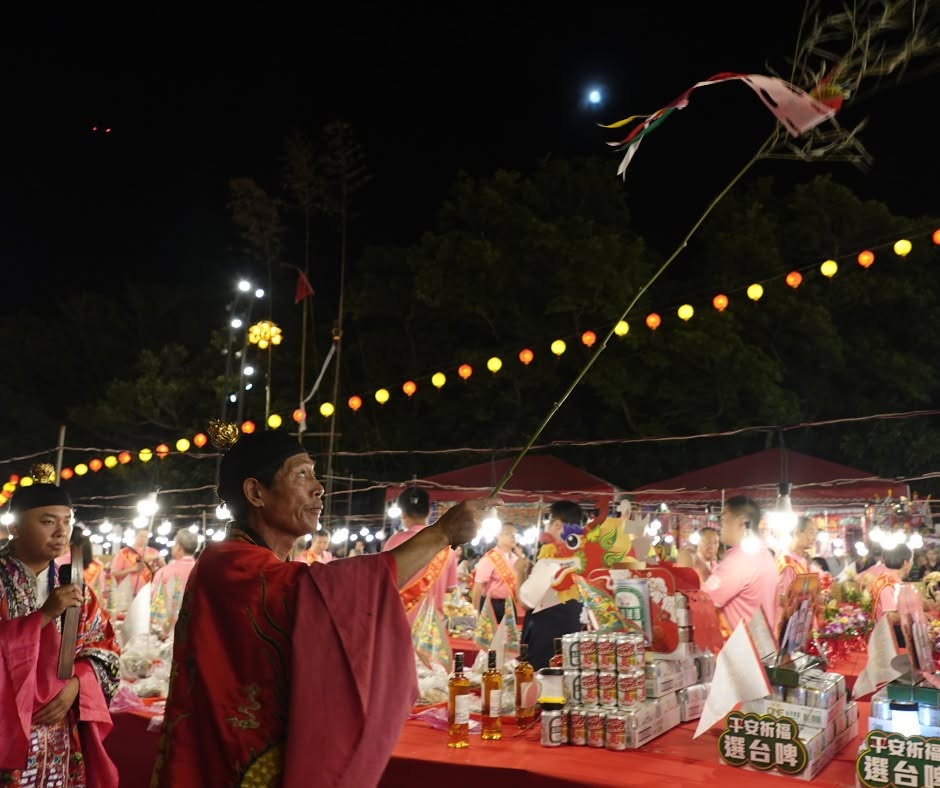
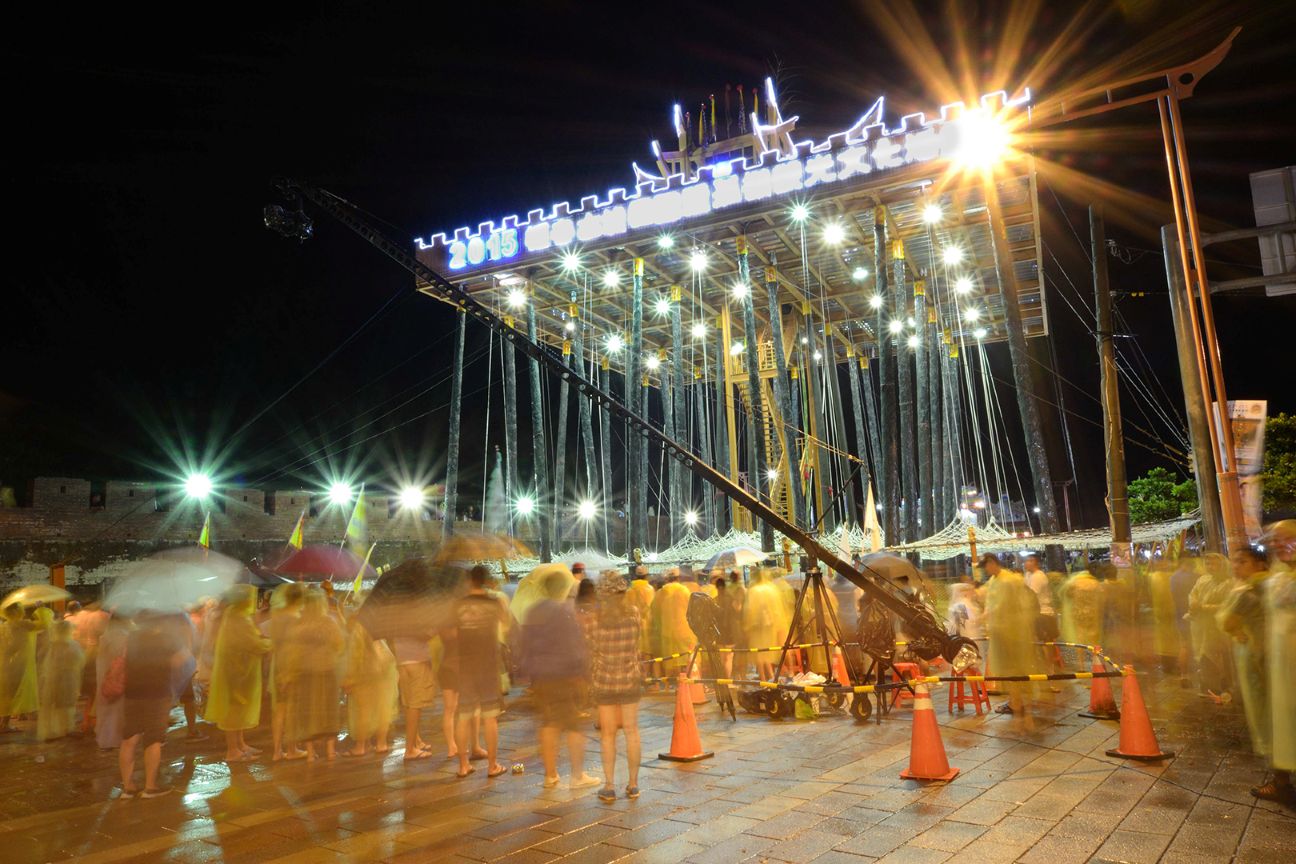
If the daily offerings are the season's quiet heartbeat, the closing days deliver its most spectacular moment. On the last night of Ghost Month, before the underworld's gates shut for another year, the coastal town of Toucheng in Yilan County (and, on a smaller scale, Hengchun in Pingtung) hosts Qi ǎ ngg ū, a pole-climbing competition. Teams of climbers scale butter-greased pillars over ten meters tall, topped with an even taller bamboo lattice, racing to reach flags and offerings at the summit.
The ritual traces back to Qing-dynasty settlers on the Yilan plain, many of whom died far from home to disease, disaster, and conflict, leaving behind wandering spirits with no family to claim them. Communities began climbing to snatch offerings on their behalf, then handed the food to the poor. Banned for a period for being too dangerous, the tradition was revived in Toucheng in 1991 with modern safety measures, and today it draws thousands of spectators for an all-night spectacle that fuses folk religion, athletic daring, and civic pride — proof that Ghost Month, for all its solemnity, still knows how to throw a party for charity.
Living Alongside the Good Brothers
Ghost Month also carries a set of everyday cautions, ones woven so deeply into daily life that many Taiwanese observe them without a second thought. People avoid swimming or lingering near rivers, lakes, and the sea, which is actually a practical wisdom about summer currents dressed in the language of water spirits. Late-night wandering is discouraged, and if you hear your name called from behind after dark, tradition warns you never to turn around, lest something less familiar answer instead. Hanging laundry outside overnight is avoided too: a shirt's empty, human-shaped silhouette is thought to be a tempting place for a spirit to rest.
Why It's Worth Experiencing
Ghost Month offers a rare window into how Taiwan, a hyper-modern society with bullet trains and world-leading chip foundries, still moves in step with centuries-old beliefs about duty, hospitality, and memory. It's a culture that makes room for compassion even toward the forgotten dead, and that generosity of spirit says as much about Taiwan's living as it does about its ghosts.
For anyone drawn to Taiwan, as a traveler chasing a night market lit by incense smoke, an entrepreneur curious why a snack bag sits on a factory floor, or a language learner puzzling out why "Good Brother" can mean something other than a sibling: Ghost Month is an open invitation. Come see it, ask questions, and maybe leave an orange on the table. The Good Brothers, and the people who welcome them, will be glad to have you.
